Black mold in a Tampa home is removed the same way as any other indoor mold: stop the moisture, contain the area, cut out porous materials that are colonized, clean hard surfaces and dry everything. EPA says color does not tell you how risky a mold is, and when growth is visible, sampling is usually unnecessary before cleanup. Call the number on this page to be connected with a local mold remediation company in Tampa.
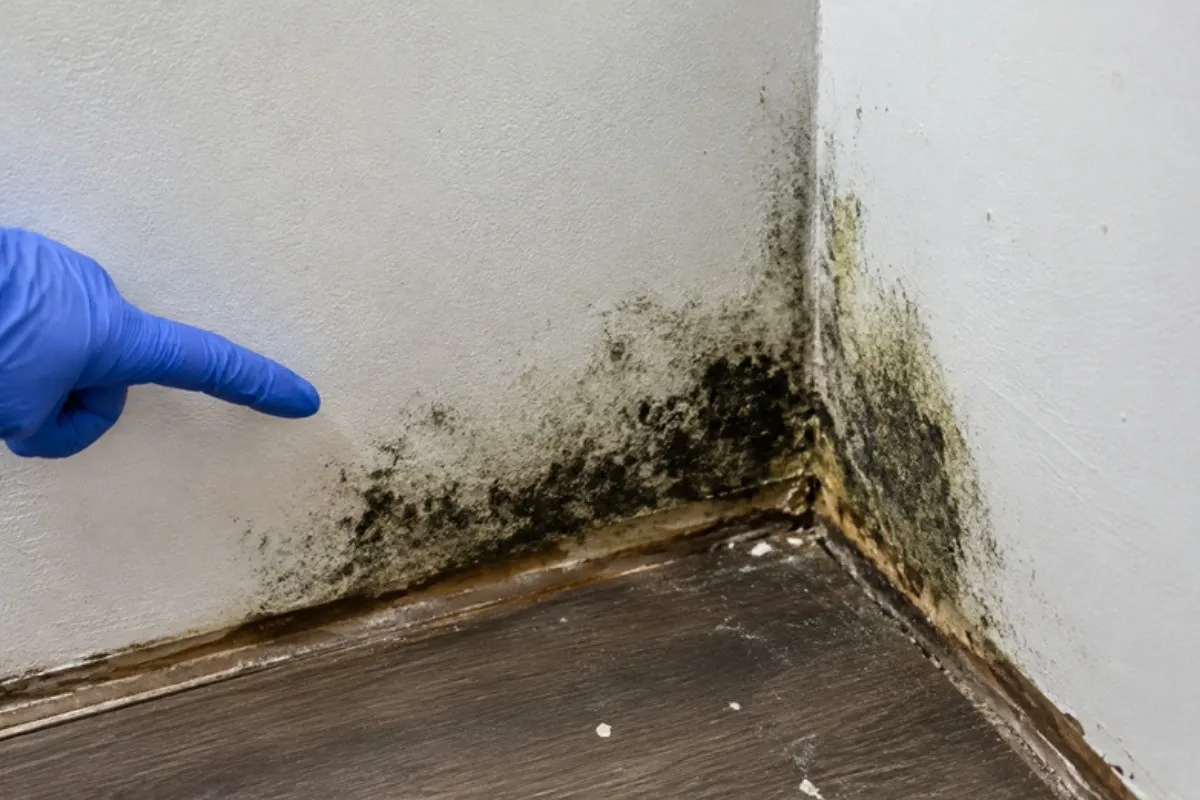
Why the color matters less than you think
Plenty of molds look black or dark green, and a dark patch on a bathroom ceiling or behind a toilet tank is not automatically the species people search for. EPA sets no federal limits for mold or spores, and in most cases it does not recommend sampling when you can already see growth. You plan the removal around three questions instead: how big is it, what is it growing on, and where is the water coming from.
Where dark mold shows up in Tampa homes
- Bathroom ceilings and shower corners where the exhaust fan is weak or missing.
- Drywall behind sinks, dishwashers and refrigerator ice-maker lines with slow leaks.
- Ceilings and upper walls under roof leaks after summer storms or a hurricane.
- Baseboards and the bottom of drywall in slab homes that took on water.
- Subfloors and joists in raised wood-frame bungalows in Seminole Heights or Hyde Park.
Small patch or a job for a company
EPA says that if the moldy area is under about 10 square feet, roughly a 3 ft by 3 ft patch, most homeowners can clean it themselves. Scrub hard surfaces, dry them fully, and do not paint or caulk over mold. Past that size, with heavy water damage, or with growth inside walls, the job should go to a mold remediation company. People with asthma or weakened immune systems should stay out of the work area, and anyone with health concerns should talk to a health professional.
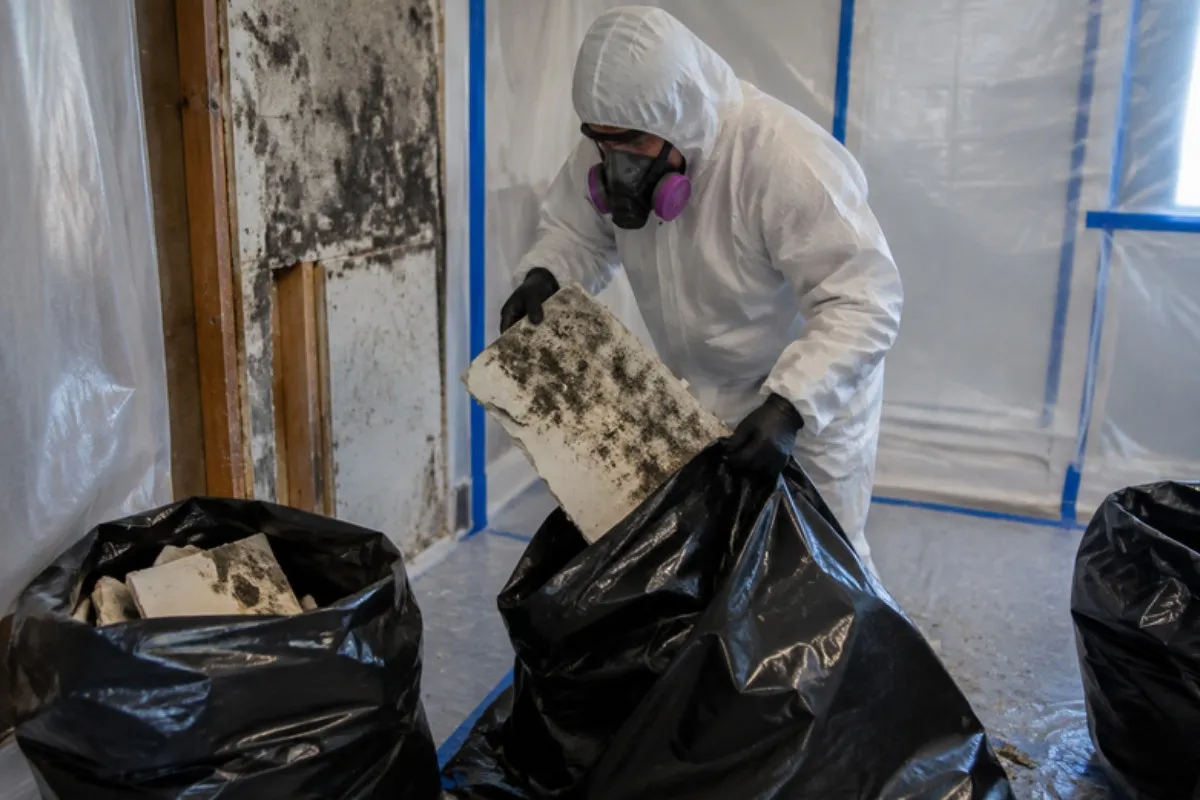
What a proper removal looks like
- The water source is found and fixed first. If it is not, EPA notes, the mold comes back.
- The work area is sealed off and put under negative air so spores are not pushed into the rest of the house.
- Colonized drywall, insulation, carpet and pad are cut out and bagged. Porous materials usually cannot be saved.
- Framing and other hard surfaces are cleaned, HEPA-vacuumed and dried.
- An independent assessor checks the area before walls are closed up.
The Florida two-company rule
Under section 468.8419 of the Florida Statutes, a company that assesses a structure cannot remediate it within 12 months, and a remediator cannot assess a structure it remediated within 12 months. So expect the person who writes the plan and the crew that does the removal to come from separate businesses. Ask the remediator whether the individual on your job holds a Florida mold remediator license, then check the license on DBPR's online licensee search.
What it typically costs
Angi reports typical Tampa mold remediation jobs between $1,347 and $3,778, with most pros charging $10 to $25 per square foot. Its Tampa ranges run $525 to $1,075 for a bathroom and $1,075 to $21,500 for walls. HomeAdvisor reports a typical Tampa range of $1,248 to $2,550. Your price depends on square footage, how much material comes out, access, and the drywall or flooring repairs that follow.
Black Mold Removal questions from Tampa homeowners
Is black mold more dangerous than other mold?
Should I test dark mold to find out what species it is?
Can I just spray bleach on it and paint over it?
Who does the clearance check after removal in Florida?
Related mold services in Tampa
Helpful guides
Black Mold Removal in nearby cities and towns
Hillsborough County
Pinellas County
Pasco County
Manatee County
Sarasota County
Polk County
Sources
- EPA: Mold Cleanup in Your Home
- EPA: Mold Information Slideshow (testing and sampling)
- Florida Department of Health: Mold
- Florida Statutes s. 468.8419: Mold-related services prohibitions
- Florida DBPR: Mold-Related Services FAQs
- Angi: How Much Does Mold Remediation Cost in Tampa, FL?
- HomeAdvisor: Mold & Asbestos Companies in Tampa, FL (cost data)
Last updated: